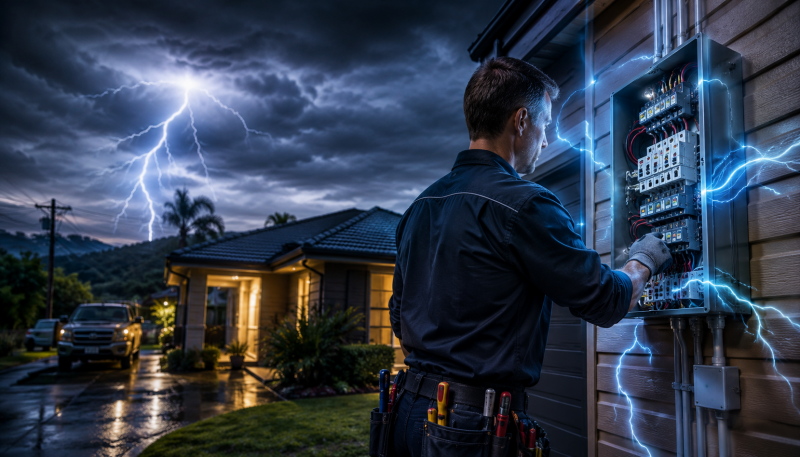
Queensland storms can bring lightning, strong winds, heavy rain and unexpected power interruptions. Even when a property appears undamaged, a storm or power surge can affect appliances, switchboards, wiring, solar systems and other electrical equipment.
Electrical surges are sudden increases in voltage. They may be caused by lightning, storms, accidents on the electricity network or even the switching of electrical equipment. A surge can damage anything connected through electrical or telecommunications wiring.
Knowing what to do after a storm can help protect your family, prevent further damage and make any insurance claim easier to support.
Signs of possible electrical storm damage
Electrical damage is not always immediately obvious. Warning signs may include:
- safety switches or circuit breakers repeatedly tripping
- lights flickering, dimming or becoming unusually bright
- only part of the property having power
- burning smells, buzzing or crackling sounds
- discoloured or warm power points
- appliances that no longer operate correctly
- damaged external wiring, meter boxes or switchboards
- water entering electrical equipment
- faults appearing in solar or battery systems
If your home has dull or flickering lights, low voltage or only a partial electricity supply, avoid touching the switchboard or metal fixtures. Where it can be done safely, switch off and unplug appliances and contact your electricity network provider.
Do not repeatedly reset a tripping safety switch
A safety switch that trips after a storm may be responding to water ingress, damaged wiring, a faulty appliance or another electrical fault.
Resetting it repeatedly without identifying the cause can expose people and equipment to unnecessary risk. Disconnect appliances from the affected circuit where this can be done safely, and arrange an inspection if the switch will not remain on.
Do not remove covers, open the switchboard or attempt your own electrical repairs.
Water-damaged equipment needs to be inspected
Electrical appliances and equipment that have been submerged, exposed to floodwater or visibly damaged should not be plugged back in until they have been assessed.
Queensland electrical-safety guidance advises that storm- or flood-affected switchboards, wiring, equipment and appliances should be tested by a licensed electrician before reconnection.
Equipment can remain dangerous even after it appears dry.
Be especially careful around solar and battery systems
Solar panels may continue generating electricity whenever exposed to light, even when the mains power supply has been disconnected.
After storm damage, stay clear of damaged panels, batteries, isolators and associated wiring. Queensland guidance recommends having a licensed electrician inspect the system before it is recommissioned or before clean-up work begins around the equipment.
Document the damage before repairs begin
Where it is safe to do so, photograph:
- damaged appliances
- tripped switches or fault indicators
- damaged power points and fittings
- water entry near electrical equipment
- visible storm damage
- model and serial numbers of affected appliances
Keep receipts, electrician invoices, assessment reports and correspondence with your electricity provider or insurer.
An electrical damage assessment can help establish what was tested, the condition of the installation, the faults identified and whether repair or replacement is recommended. However, the electrician determines the electrical findings; the insurer ultimately determines whether the loss is covered under the policy.
What an electrician may check
Depending on the reported damage, an electrical inspection may include:
- the main switchboard and protective devices
- safety-switch operation
- insulation resistance of affected wiring
- earthing and electrical continuity
- damaged circuits and fittings
- appliances connected during the incident
- outdoor electrical equipment
- solar and battery components
- evidence of overheating, water ingress or surge damage
The aim is to identify unsafe equipment, restore reliable operation and provide clear findings about the work required.
When the situation is an emergency
Stay well away from fallen powerlines, damaged service lines or electrical equipment in contact with trees, fences, vehicles or water.
Call 000 where there is an immediate threat to life. Report fallen powerlines, electric shocks, tingling taps or network supply hazards to the relevant electricity network provider. Energex advises customers in its area to call 13 19 62 for life-threatening electrical emergencies and 13 62 62 for outages.
Need your property checked after a storm?
I.C.M can assist homeowners across Brisbane and the Lockyer Valley with fault finding, electrical safety inspections, repairs and documented electrical damage assessments.
Contact I.C.M before reconnecting or continuing to use electrical equipment that may have been affected by a storm, surge or water ingress.
Related: Electrical damage reports for insurance claims · Request a written quote